
Explore different perspectives and ways of thinking to challenge existing assumptions. Course content will introduce how empathy can be used as a strategy for playful, curious and meaningful design in health collaborations. Awareness is developed and supported to consider how ‘evidence’ is used in different contexts and how to communicate the value of design to divergent communities.
1. Investigate and evaluate a range of design for health concepts, ideas and their practical application.
2. Engage with analytical and critical methods to evaluate and synthesise practice.
3. Contribute to a community of practice, founded on the principles and practices of mātauranga Māori, of manaakitanga (care), motuhaketanga (self-determination) and kōrero pono (speaking truthfully).
4. Engage and apply a range of appropriate technologies or processes for the Design for Health minor.
Explore different perspectives and ways of thinking to challenge existing assumptions. Course content will introduce how empathy can be used as a strategy for playful, curious and meaningful design in health collaborations. Awareness is developed and supported to consider how ‘evidence’ is used in different contexts and how to communicate the value of design to divergent communities.
1. Investigate and evaluate a range of design for health concepts, ideas and their practical application.
2. Engage with analytical and critical methods to evaluate and synthesise practice.
3. Contribute to a community of practice, founded on the principles and practices of mātauranga Māori, of manaakitanga (care), motuhaketanga (self-determination) and kōrero pono (speaking truthfully).
4. Engage and apply a range of appropriate technologies or processes for the Design for Health minor.
The assignment for this course is to design a creative co-design tool or activity that helps people share their experiences in a healthcare context. Working in groups, students research, prototype, and test ways to engage participants safely and meaningfully in the early stages of design research. Each year, the focus changes — for example, previous projects have explored Emergency Department waiting experiences and crisis moments in dementia care. Past outcomes have included interactive games, storytelling kits, and tactile tools that reveal emotions, needs, and lived experiences in care environments.
Felt Feelings
Florence Leung, Katelyn Flooks, Kaylin Skinner-Colley, Joshua Kuba
2025
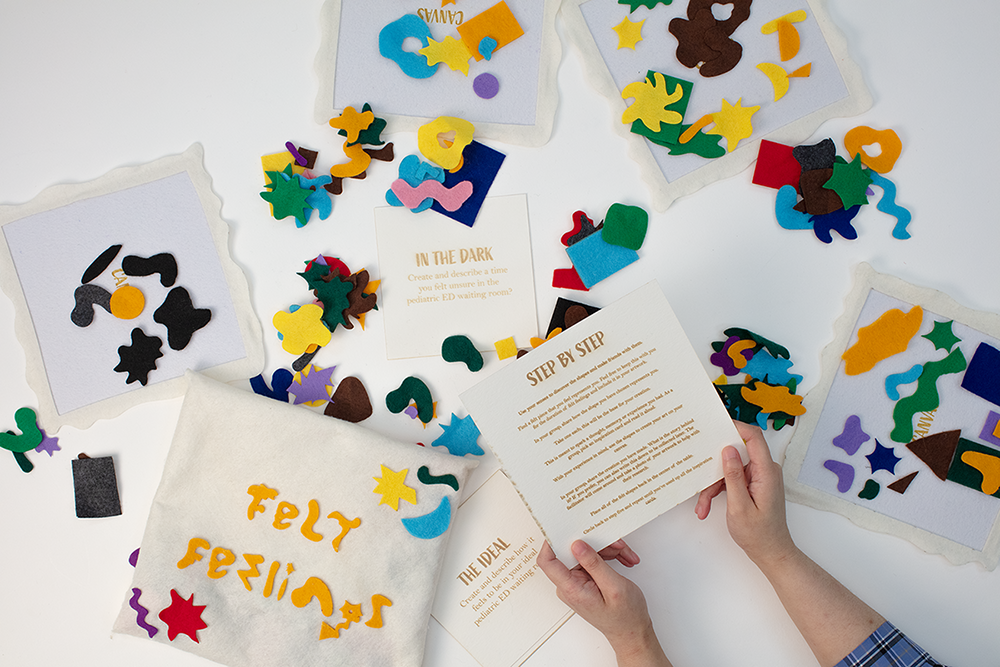
This project addresses the emotional toll and communication gap experienced by parents in pediatric emergency department (ED) waiting rooms. These environments are often stressful, confusing, and overwhelming for parents anxious about their child’s health. The co-design tool, Felt Feelings, was developed to help parents express their emotional experiences and improve communication, empathy, and care outcomes. Drawing on arts-based co-design methods, it offers an accessible, tactile, and interactive activity that captures the emotions guardians experience during long waits. Insights gathered through the tool aim to inform the design of ED spaces that are more supportive, transparent, and responsive to parents’ needs.
Building Expression
Chris Anderson, Nicole Welthagen
2024
This project addresses the emotional toll and communication gap experienced by parents in pediatric emergency department (ED) waiting rooms. These environments are often stressful, confusing, and overwhelming for parents anxious about their child’s health. The co-design tool, Felt Feelings, was developed to help parents express their emotional experiences and improve communication, empathy, and care outcomes. Drawing on arts-based co-design methods, it offers an accessible, tactile, and interactive activity that captures the emotions guardians experience during long waits. Insights gathered through the tool aim to inform the design of ED spaces that are more supportive, transparent, and responsive to parents’ needs.
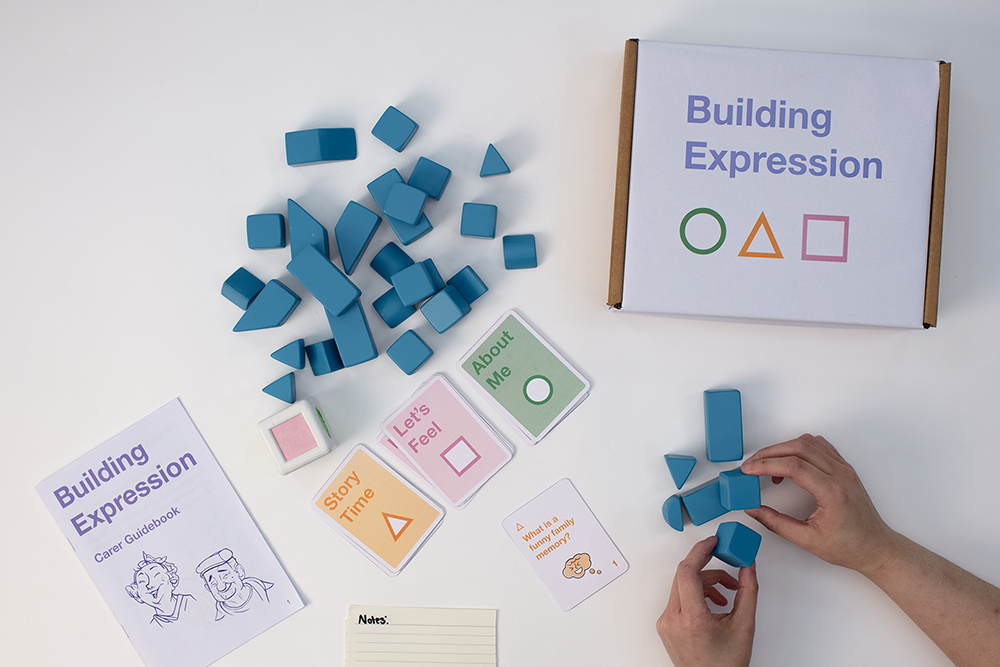
This project explores how crisis moments can be improved for people living with dementia and their carers. Grounded in the concept of personhood, the research examines how anxiety and agitation arise when a sense of individuality is diminished. Drawing on scholars such as Rodgers (2017) and Branco et al. (2015), Building Expression is a co-design tool that uses prompts and building blocks to help individuals with dementia share personal stories and emotions. Supported by a carer’s manual, the tool fosters communication, self-expression, and dignity, aiming to preserve personhood and promote emotional well-being during challenging moments.
15
6
150
Click for link to course descriptor


