Auckland University of Technology
Te Wānanga Aronui o Tāmaki Makau Rau
School of Art & Design
Te Kura Toi a Hoahoa
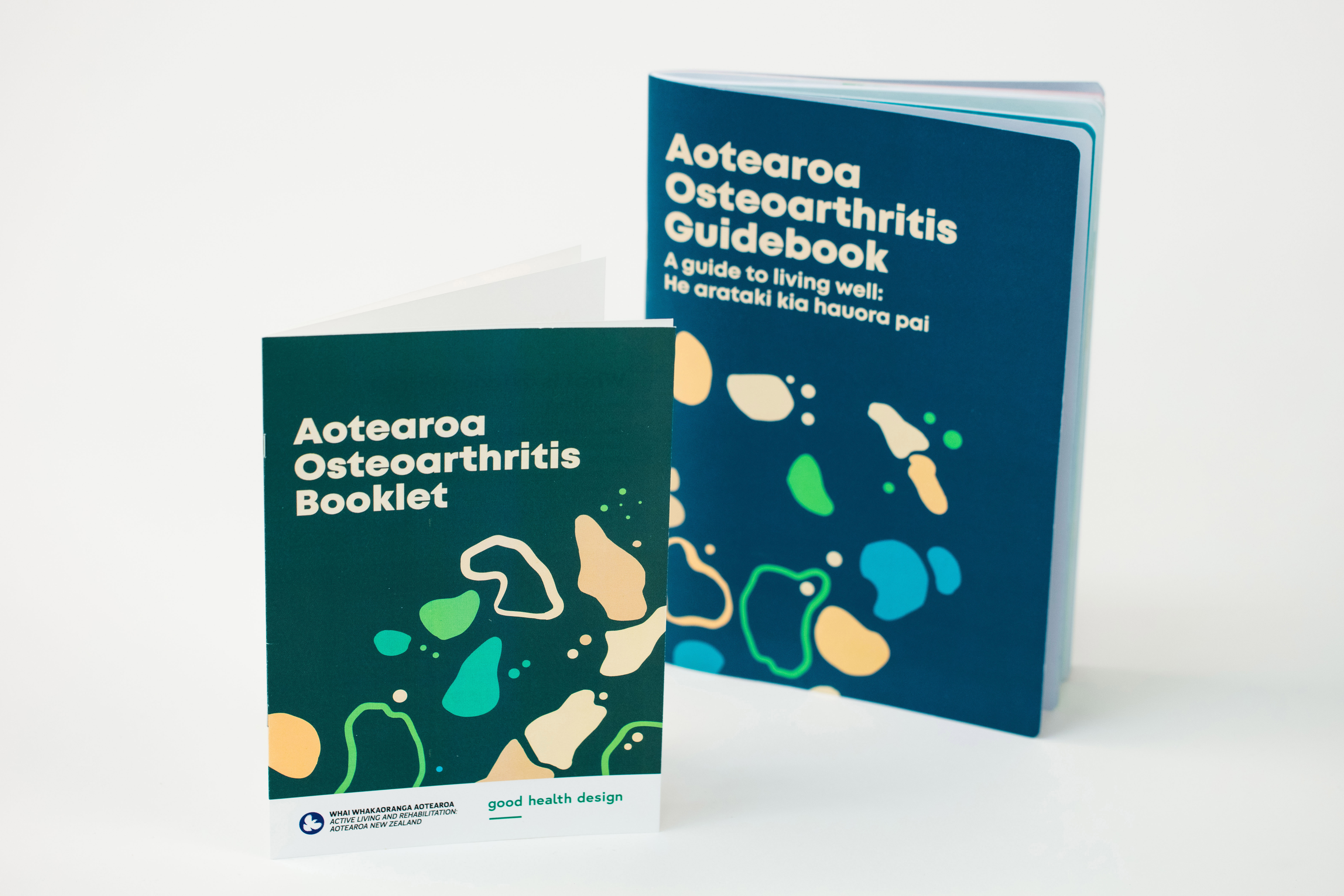
The Osteoarthritis (OA) Guidebook project began in 2020 as a collaboration between Good Health Design and Active Living and Rehabilitation: Aotearoa New Zealand. The brief was clear but ambitious: to create an accessible, engaging, and culturally resonant guide for people living with osteoarthritis—one that didn’t feel clinical, overwhelming, or generic.
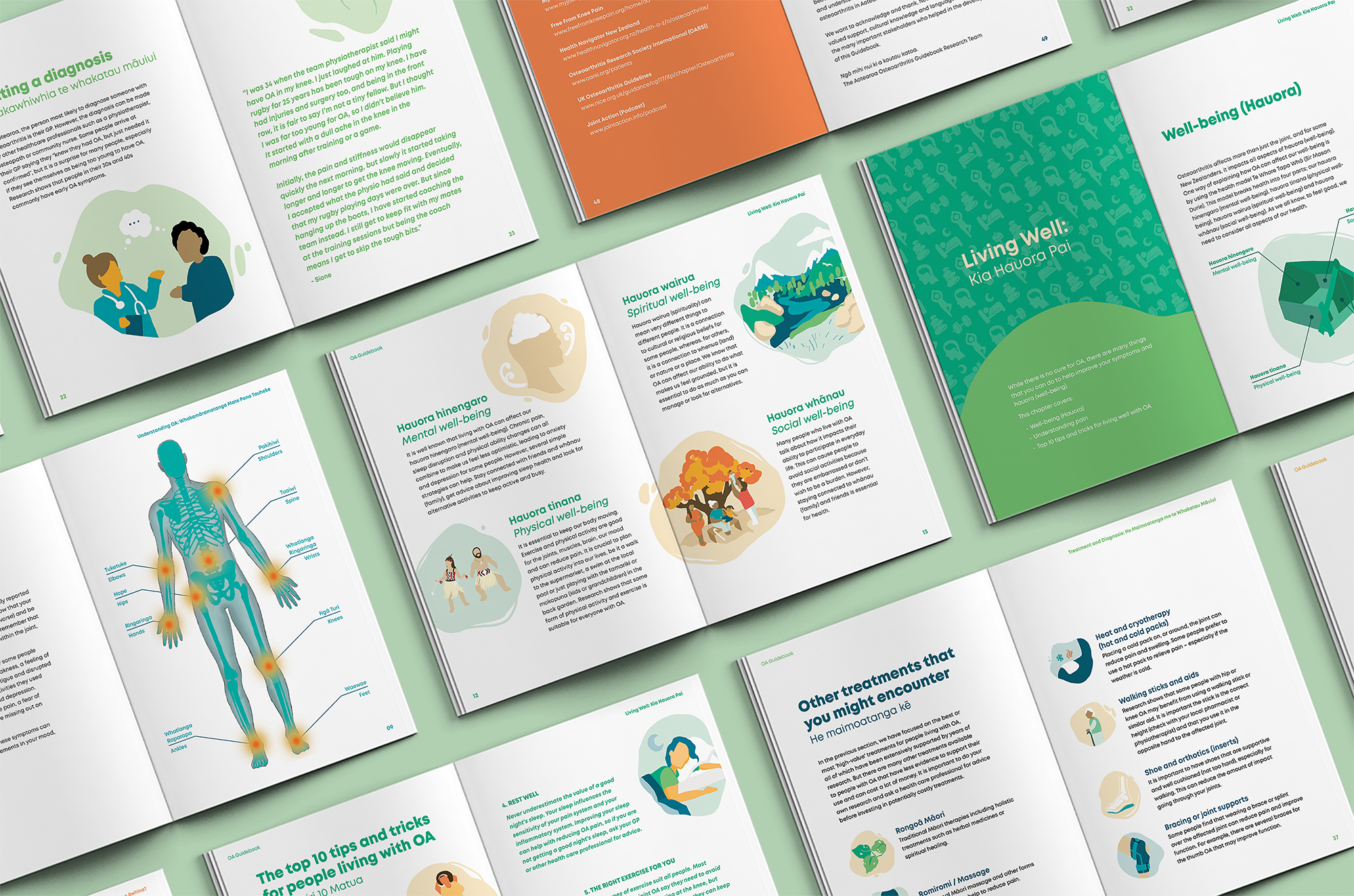
Geena Stanley, Janette Ng, and Doyeong Nam, three design students interning with us at the time, led the development of the first version of the OA Guidebook. Their work marked a critical shift away from traditional health communication formats toward something more intuitive and empathetic. Instead of dense medical jargon and walls of text, the guidebook uses colour, illustration, and storytelling to support patient understanding and wellbeing.
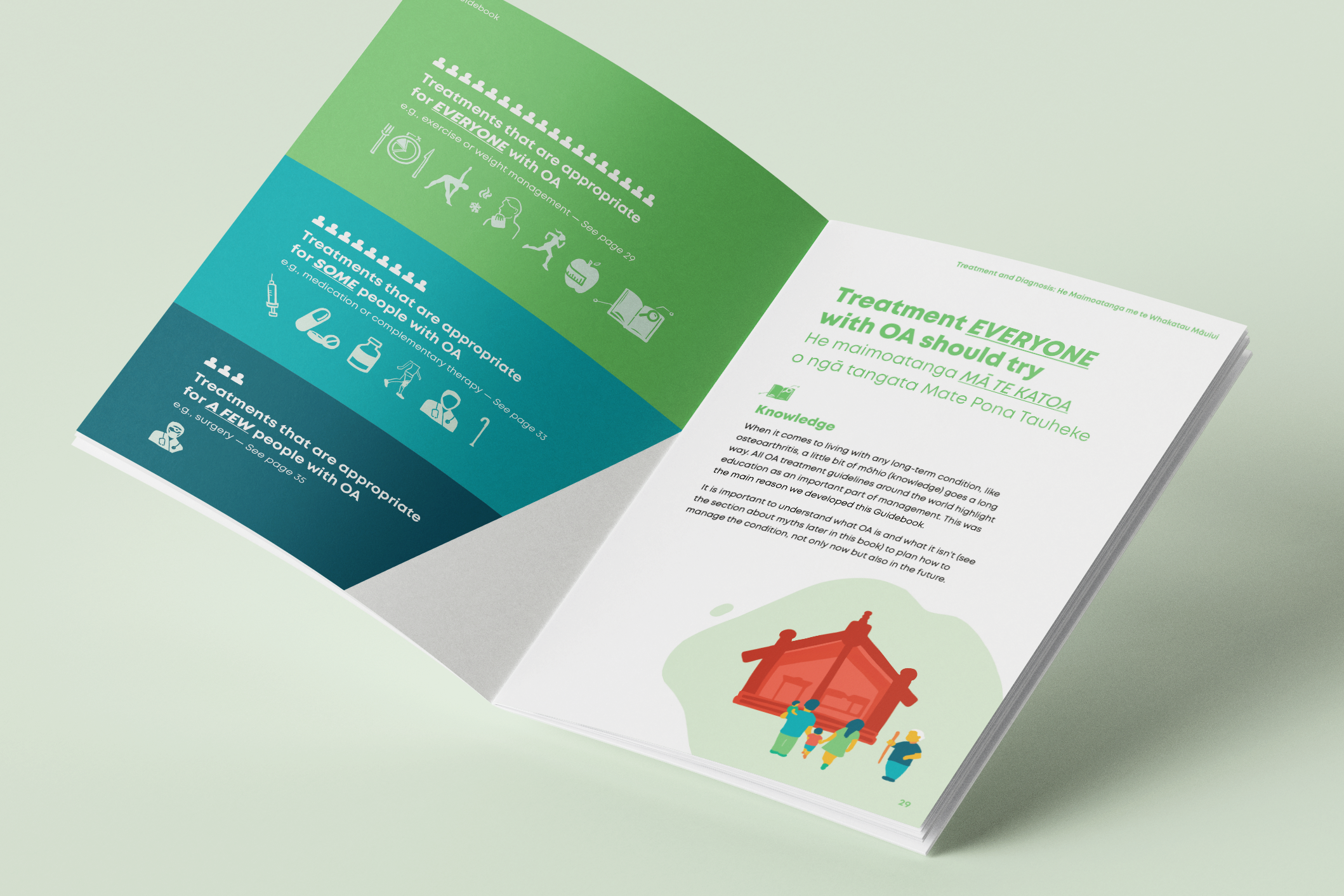
The team began by reimagining how to present five key chapters covering general information about OA, symptoms, treatment options, and recommended actions. The aim was to communicate clearly and simply while speaking directly to patients in a warm, reassuring tone. Studying existing resources helped identify what to avoid—namely, generic design, inaccessible language, and a lack of cultural nuance.
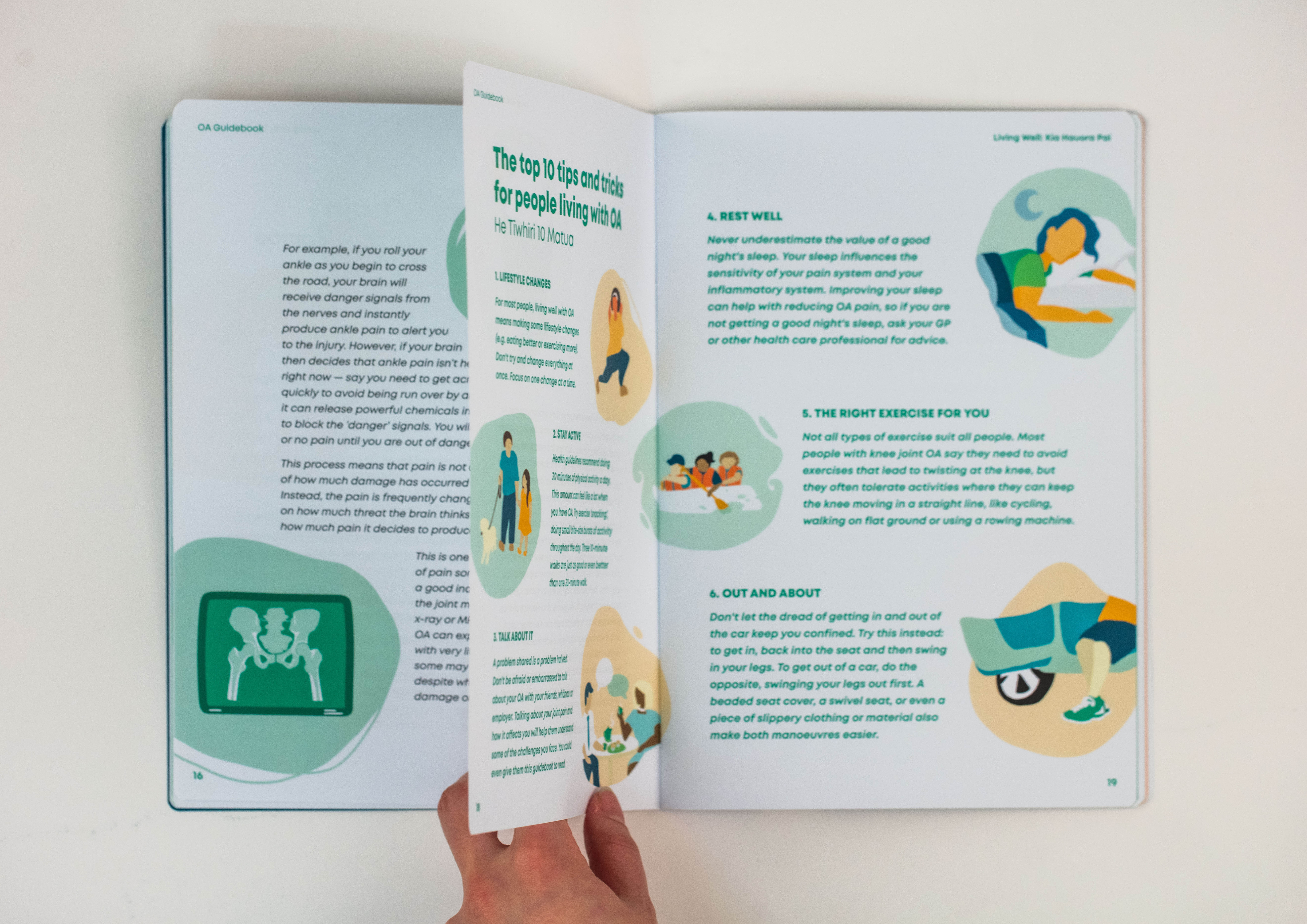
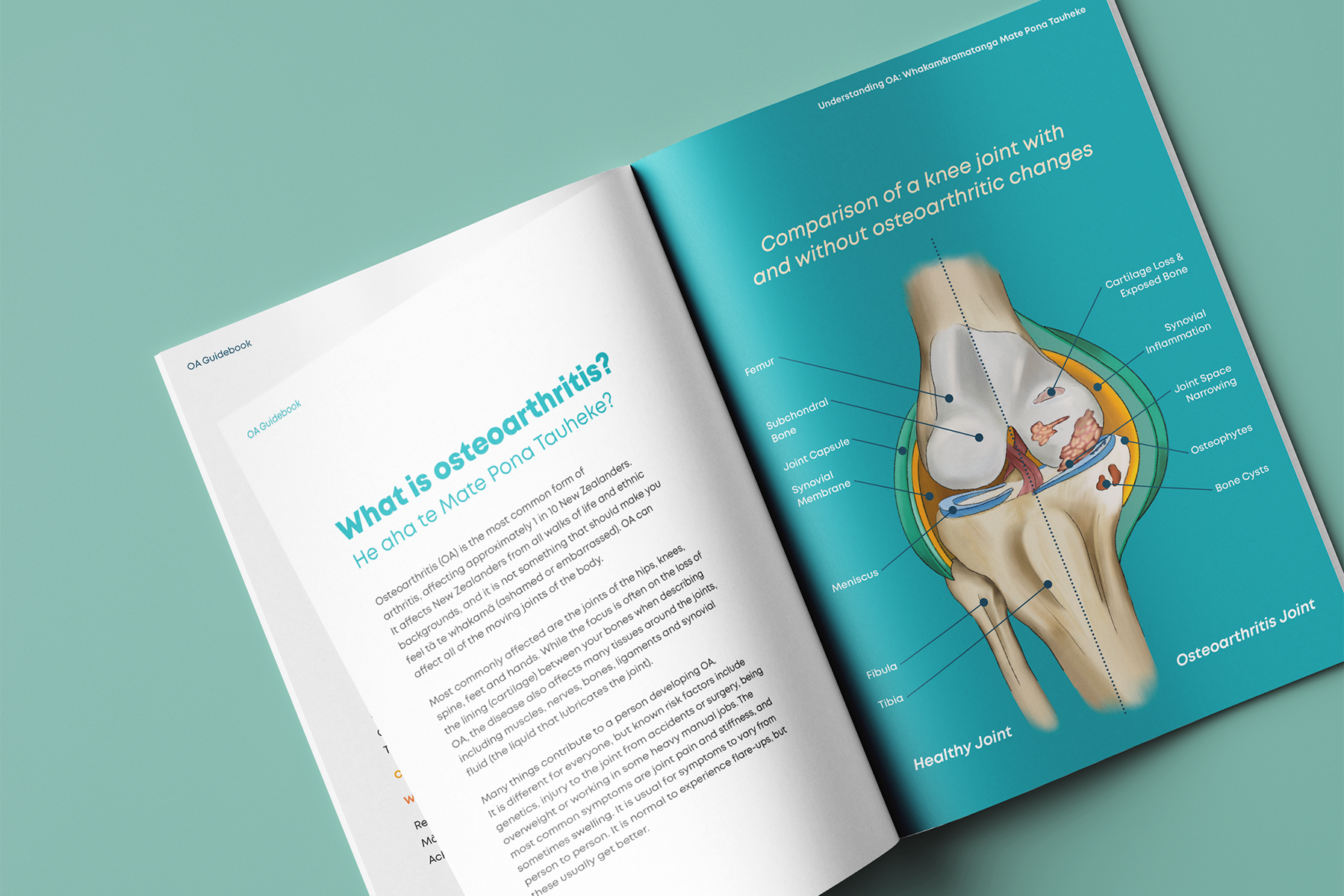
Geena focused on the publication’s overall design strategy, with a particular emphasis on reducing cognitive overload. Her layout approach embraced whitespace, clarity, and modular information. She also integrated a colour-coded tab system inspired by Janette’s New Zealand landscape palette to help with easy navigation through the chapters.
Janette led the development of an illustration library that brought both aesthetic and emotional dimensions to the guide. Her characters reflected Aotearoa’s diverse population and challenged assumptions about who OA affects. The visual style was organic, calming, and grounded in natural forms—supporting the project’s wider kaupapa of creating a guide that feels personal and welcoming.
Meanwhile, Doyeong contributed a suite of accurate but simplified medical illustrations to ensure patients and caregivers could understand what OA is and how it affects the body. Her work struck a balance between clinical precision and visual friendliness, bridging the gap between biomedical and everyday understanding.
Together, the students prototyped and tested early versions of the guidebook, with feedback from patients shaping each new iteration. This co-design process not only improved the material itself but also deepened its alignment with the lived realities of people navigating osteoarthritis.
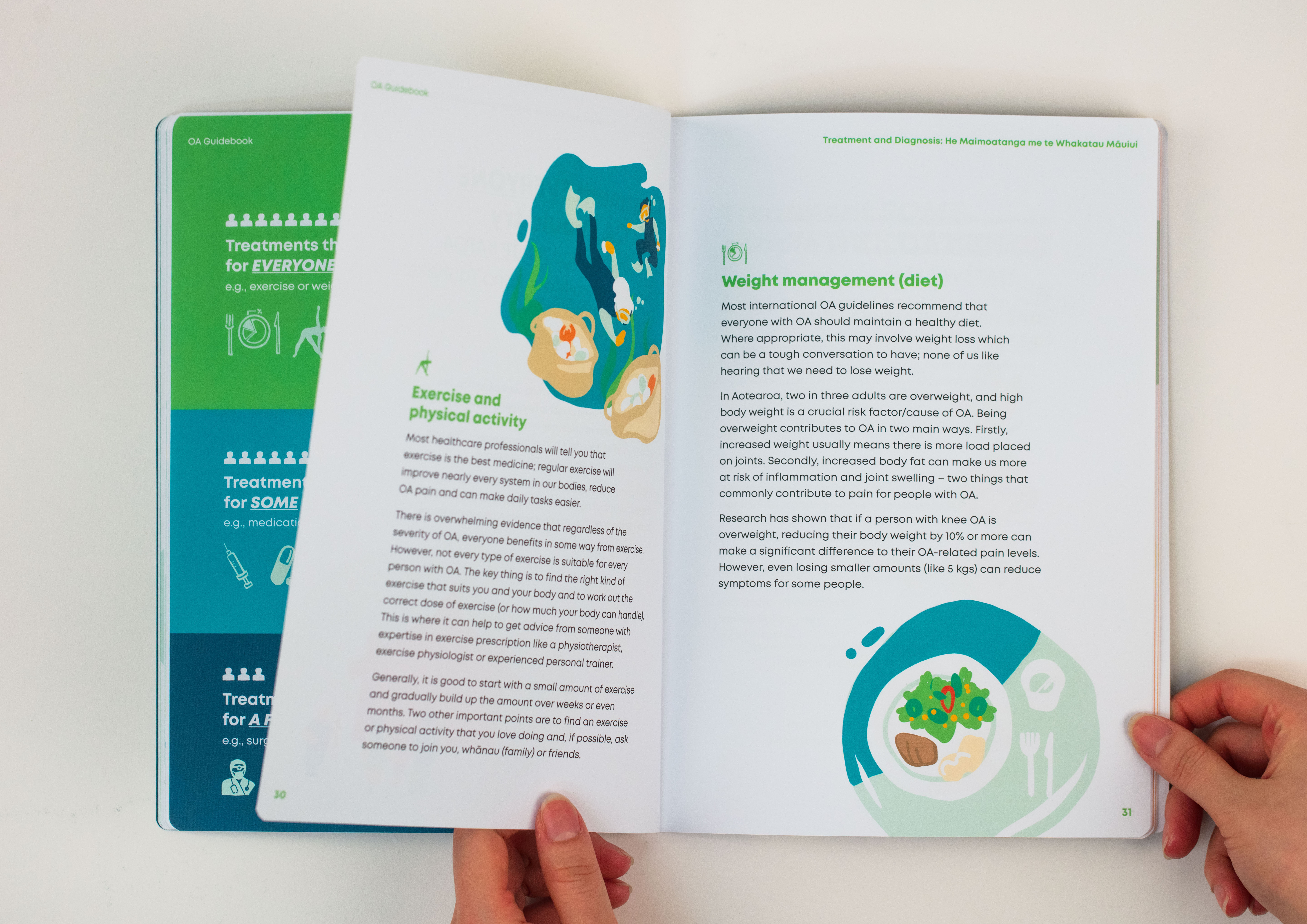
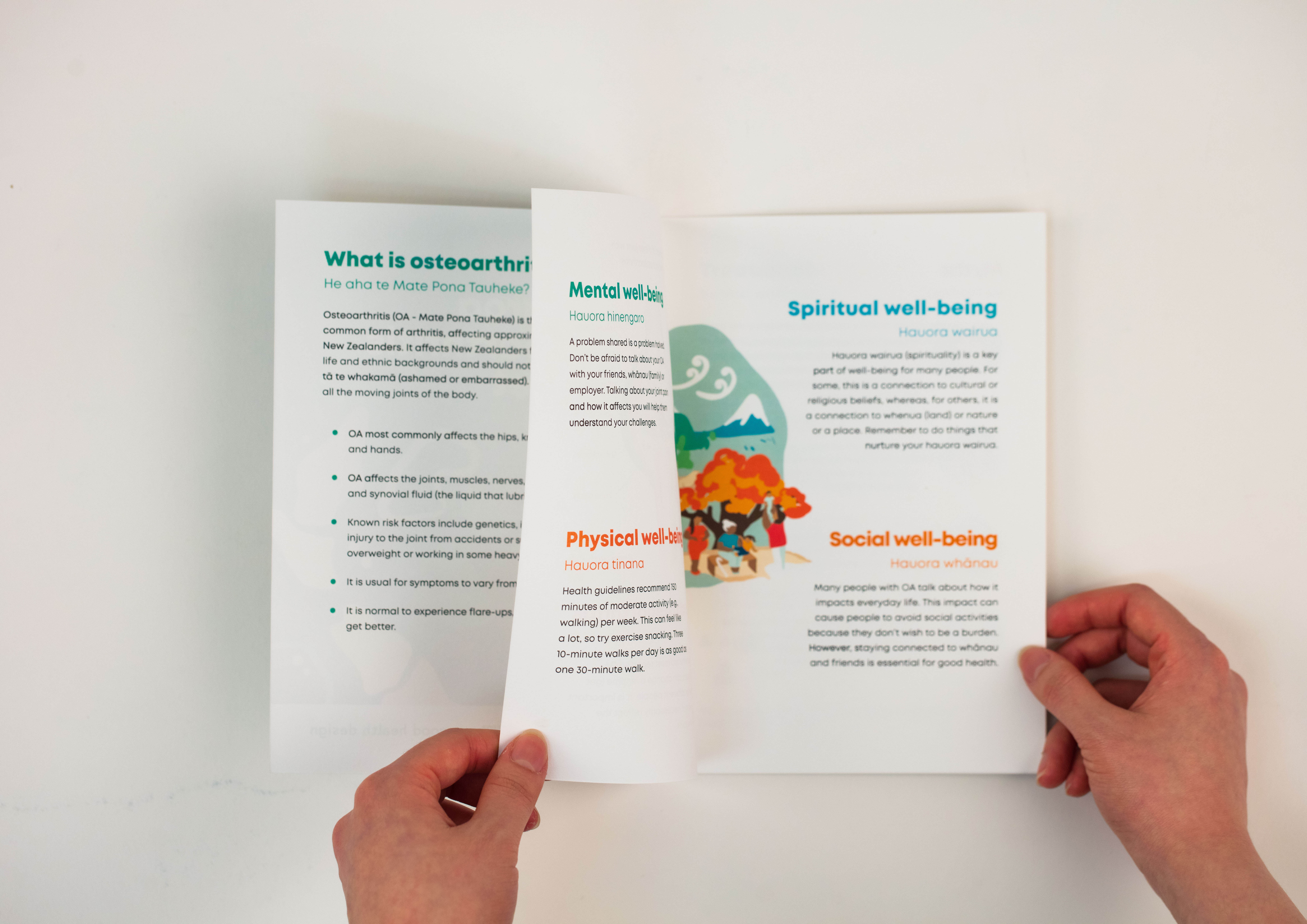
Since its first release, the guidebook has gone through further development and is now being distributed across healthcare settings for evaluation and continued use. Recognising that even the refined guidebook was still a substantial read, a more concise version—the OA Booklet—was later produced. This format offers the same helpful information in a distilled, more portable format. Designed by summer intern Deanna Griffin, the booklet is particularly aimed at reducing barriers for those who may find lengthy documents inaccessible or intimidating.
Building on the success of both formats, recent efforts have turned toward ensuring the resources are culturally and linguistically inclusive. The OA Booklet has now been translated into Te reo Māori and a Samoan version is currently in development, with new students contributing to its adaptation.
View the digital e-books of these resources:
Aotearoa Osteoarthritis Guidebook
Aotearoa Osteoarthritis Booklet